
How to Create a Drum & Bass Artist EPK That Gets Read
An EPK saves industry contacts time by putting accurate music, story, assets and booking information in one organised place.
Read article →
Learn / discover / progress
Cut through disconnected tutorials. Find the right lesson, article or resource for your level, software and next creative move.
Structured learning signals
Three focused routes into the library. Start broad, then use the filters to find the exact lesson, article or course you need.
Beginner · Any DAW
Intermediate · Synthesis
Advanced · Any DAW
Quick routes
60 useful signals
Showing the full learning library
An EPK saves industry contacts time by putting accurate music, story, assets and booking information in one organised place.
Read article →
Distortion can create weight and translation, but input level, processing order and contrast determine whether it helps the mix.
Read article →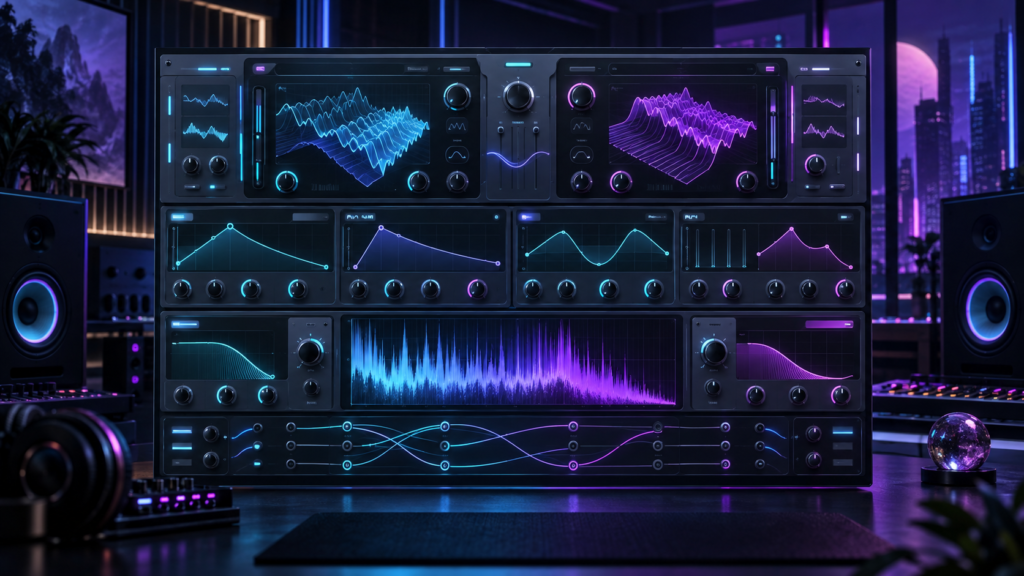
Create a versatile lead from an initial patch, then shape its attack, movement, stereo image and effects for different sections.
Read article →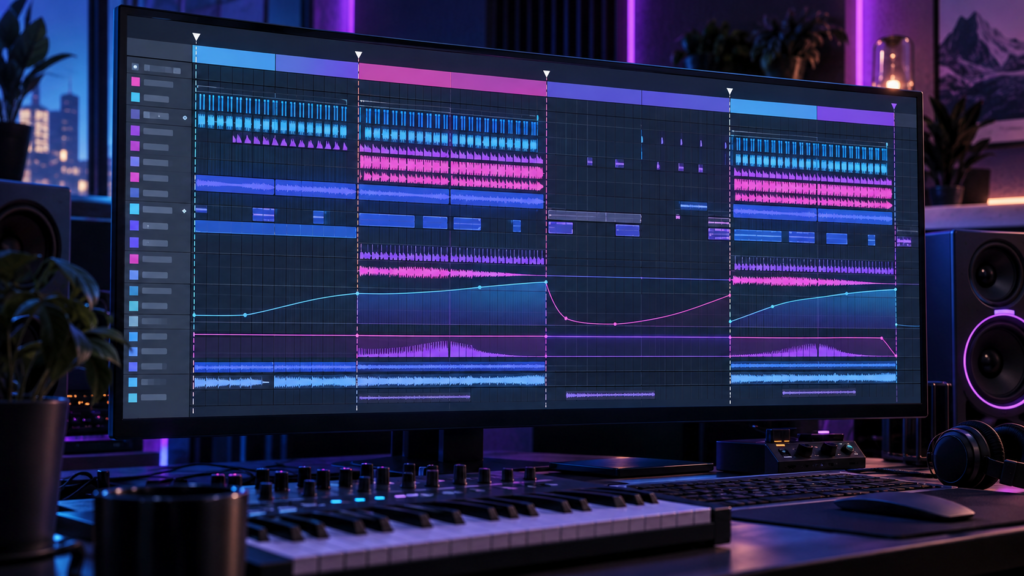
Beatmatching keeps tracks in time; EQ decides which parts dominate. Learn controlled bass exchanges and clearer layered drops.
Read article →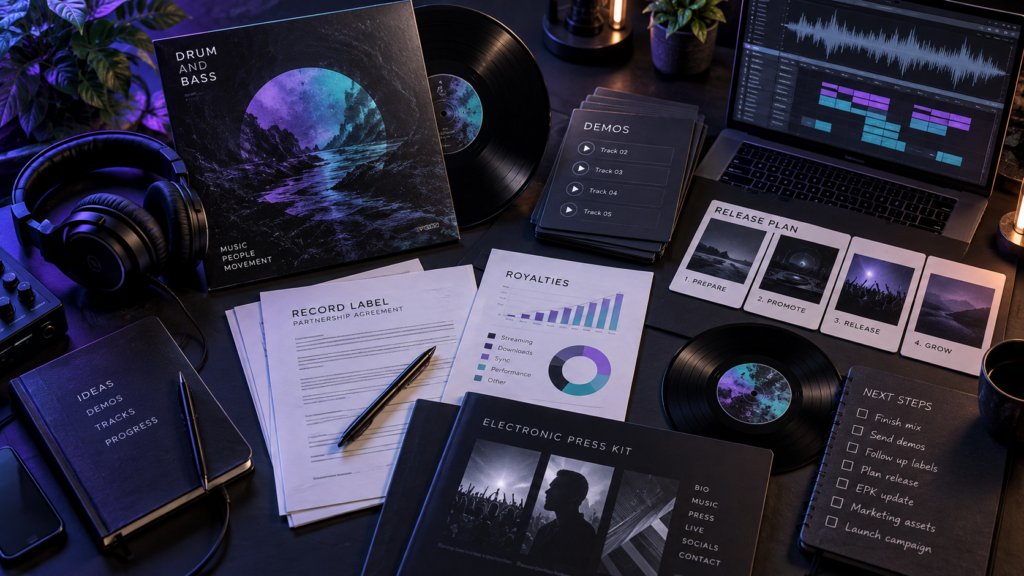
One release can generate several distinct income streams. Separate the composition from the recording and keep registrations consistent.
Read article →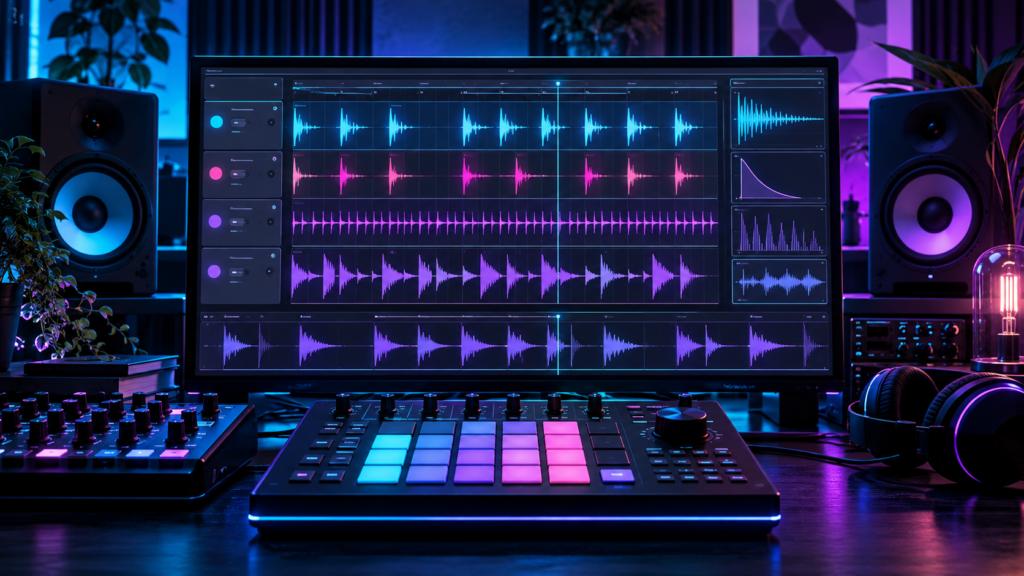
Build a complete drum-and-bass groove from an empty project, with clear roles for the kick, snare, percussion and break layers.
Read article →
Turn a sampled break into a flexible drum-and-bass rhythm without flattening the performance that made it useful.
Read article →
Design a recognisable Reese from a simple initial patch, then develop movement and aggression without sacrificing the low end.
Read article →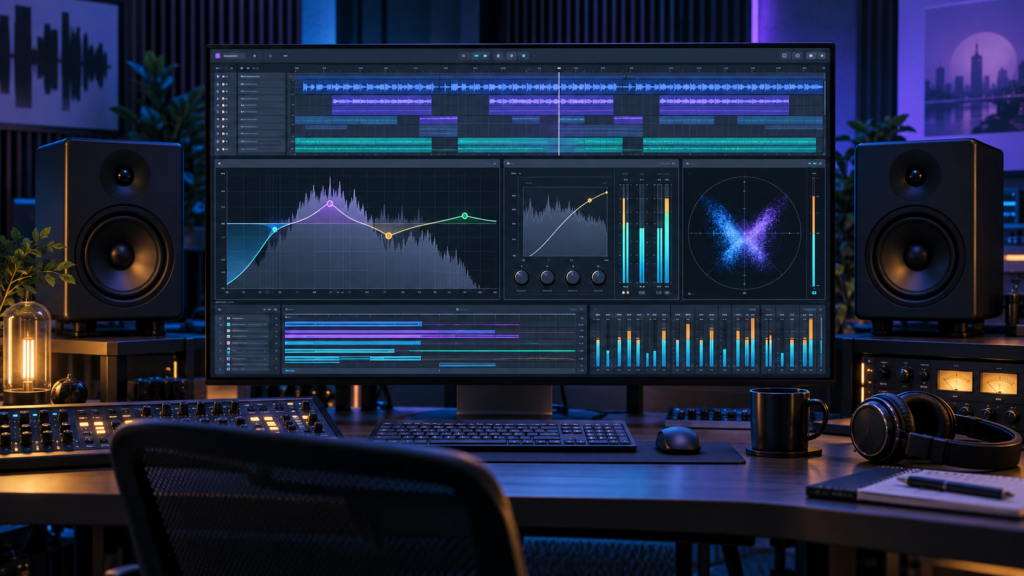
Width can make a mix immersive, but unstable phase relationships can remove impact. Learn where to keep focus and where to create space.
Read article →
Set sidechain movement according to the kick and bass envelopes instead of copying a fixed preset.
Read article →
Build depth and rhythmic space while keeping fast drum-and-bass mixes direct, clear and controlled.
Read article →
Move beyond the eight-bar loop by defining the track's promise, arranging contrast and using structured review passes.
Read article →
A prepared set is adaptable rather than rigid: know the music, mark useful structure and arrive with several credible energy paths.
Read article →
Give vocals a stable place in the arrangement and frequency spectrum without simply making them louder.
Read article →
Resampling converts moving sound design into editable audio, helping you discover precise fills and variations that are difficult to programme directly.
Read article →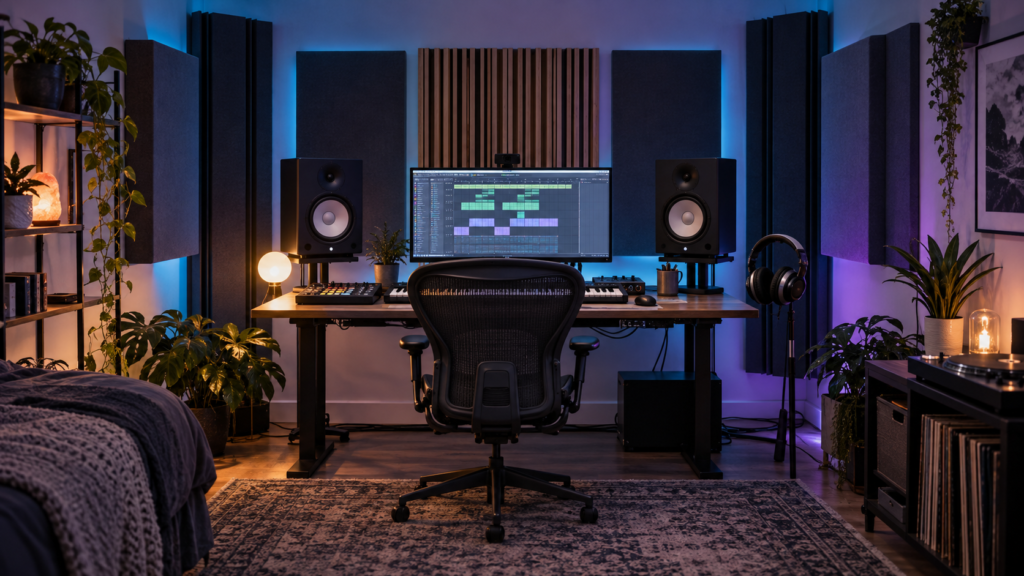
Treating a room is about making monitoring more predictable, not making every surface silent or buying decorative foam.
Read article →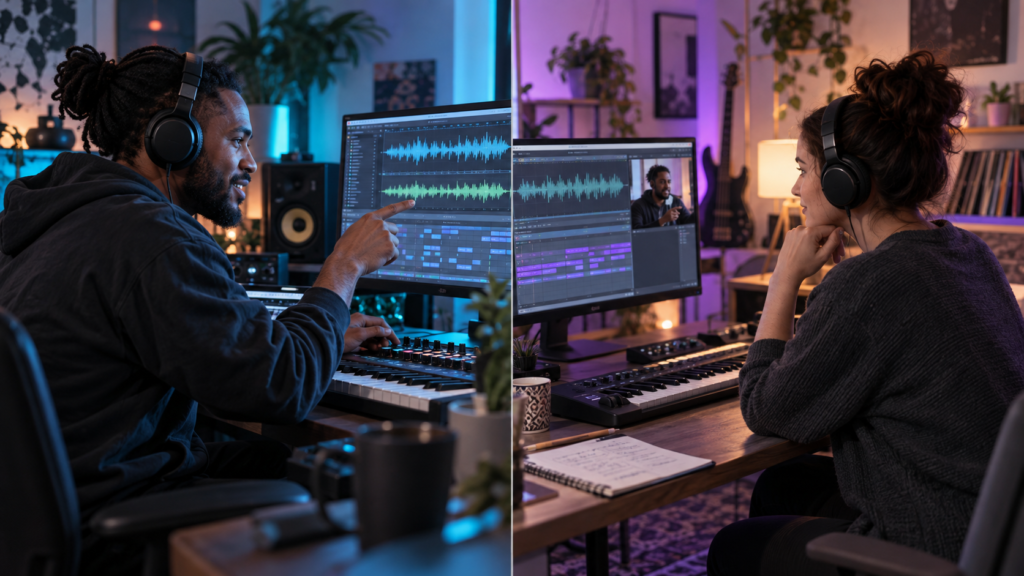
Useful feedback identifies a listener's experience and context; it does not require you to apply every suggested solution.
Read article →
Two strong sounds can become weak when combined. Use repeatable tests to identify timing, polarity and stereo problems before processing further.
Read article →
Transitions should explain where the arrangement is going. Build them from musical changes before piling on generic effects.
Read article →
Automation turns static sounds into an arrangement, but every lane should support a clear musical change.
Read article →
A reliable export reproduces the approved mix, starts at the agreed boundary and includes enough information for the recipient to work safely.
Read article →
Gain staging is the management of signal level throughout the session, not a single target number on every channel.
Read article →
Build an evolving patch from a restrained harmonic source, then place its width and movement around the main elements.
Read article →
Beatmatching is the combination of tempo matching, beat alignment and phrase awareness. Practise each skill separately before combining them.
Read article →
A strong demo submission makes it easy for the right label to hear the right music and understand who created it.
Read article →
Compression changes dynamics and envelope. Learn to hear what it is doing before using it automatically on every channel.
Read article →
Sub notes can vary even with identical MIDI velocity. Identify whether the cause is musical, technical or acoustic before applying boosts.
Read article →
Protect the creative process with collected files, clear handovers, compatible exports and early agreements about responsibilities and rights.
Read article →
Dynamic EQ changes selected frequencies only when they become problematic. Learn how to control moving resonances and create space without permanently altering the sound.
Read article →
Percussion supplies motion between the main kick and snare. Learn how to create controlled hat, shaker and foley patterns that develop across a full arrangement.
Read article →
A promotional DJ mix should demonstrate selection, pacing and technical control. Learn how to record a clean mix and prepare it for reliable online listening.
Read article →
First bookings usually come from musical fit, visible participation and reliability. Learn how to prepare your profile, contact promoters and deliver a professional set.
Read article →
Compare DistroKid, TuneCore, CD Baby, Ditto, Amuse and LANDR for pricing, royalties, Beatport delivery, release control and long-term catalogue safety.
Read article →
Prepare masters, metadata, artwork and rights; choose a distributor; pitch responsibly; and run a complete independent release campaign.
Read article →
Understand what belongs in the mix, what mastering can and cannot repair, how to export a premaster and how to judge loudness fairly.
Read article →
Turn a strong loop into a complete arrangement with reference markers, decisive workflow stages, transitions, feedback and a finish deadline.
Read article →
Program a convincing two-step drum pattern, layer breaks with purpose and turn one bar into an energetic eight-bar DnB groove.
Read article →
Compare TikTok, Instagram, Facebook, X, YouTube and SoundCloud, then build a posting, engagement and advertising system that grows real music fans.
Read article →
Build a legal, lossless DnB library using Beatport, Bandcamp, Juno Download and label stores, with WAV, AIFF, FLAC and MP3 explained.
Read article →
Compare the three major DJ workflows, understand hardware compatibility and learn how Mixed In Key supports harmonic set preparation.
Read article →
Choose a first DJ controller, understand the path to club-standard CDJs and avoid spending thousands before learning the fundamentals.
Read article →
Create and customise a SoundCloud artist profile, publish your first release and use RepostExchange to build genuine artist relationships and fans.
Read article →
Learn where to find high-quality DnB samples, how royalty-free licences work, and what must be cleared before releasing music on Spotify.
Read article →
Choose powered studio monitors that suit your room, understand SPL and listening distance, and avoid common placement mistakes.
Read article →
Choose accurate production headphones for deep bass, mixing and recording, with practical open-back and closed-back recommendations.
Read article →
Understand inputs, outputs, converters, preamps, latency and how to choose an audio interface for a home DnB studio.
Read article →
Choose the right number of keys, controls and connectivity for your room, workflow and DnB production style.
Read article →
Learn the typical BPM ranges of modern DnB, how tempo changes groove and arrangement, and how to choose the right speed for your track.
Read article →
Discover how arrangement, sound selection, controlled low end, clipping and limiting combine to create competitive DnB loudness.
Read article →
Understand soft and hard clipping, why DnB producers clip drums and buses, and how to gain loudness without destroying punch.
Read article →
Understand intervals, scale degrees, bass-friendly keys and how notes work together in modern drum & bass without relying on guesswork.
Read article →
Learn what your DAW already does well, when specialist tools such as Serum 2 and FabFilter help, and how to build a focused DnB plug-in collection.
Read article →
Build a powerful bass that translates by separating weight, character and width without phase cancellation or muddy overlap.
Read article →
A practical beginner map of sub, drums, bass, vocals and effects—with clear frequency ranges and a method for preventing masking.
Read article →
Understand minor scales, bass-friendly notes and how to write a musical F-minor DnB bassline that stays powerful across the keyboard.
Read article →
Learn how 8, 16 and 32-bar phrases shape drum & bass arrangements, and how to use reference tracks without copying them.
Read article →
A focused route through drums, bass, arrangement and finishing—without drowning in disconnected tutorials.
Read article →
Before adding another plug-in, check the relationships between your kick, snare, breaks and bass.
Read article →
Use professional releases as navigational tools while keeping the decisions that make your music yours.
Read article →Build the core production relationships that make tracks hit harder, move clearly and reach the finish line.
Explore course →No exact match
Try a broader search or remove one filter. The library will keep growing as new lessons, guides and tools are published.
Need a clearer starting point?